Monday, January 21, 2013

The Slippery Are Very Crafty...

Originally posted at Murder Is Everywhere, Jan. 13, 2012....


Okay, it's an easy laugh. I know. But I can't help myself.


One freezing winter night in Beijing around 2001, a friend dragged me to the entrance of a well-known and at the time upscale shopping center to show me this sign. We both laughed so hard that I disregarded the advice and nearly slipped on the ice.

There are websites full of "Chinglish" like this, and a part of me feels that I shouldn't laugh at it...but I do. And I take photos...

Sometimes the signs are poetic....


Sometimes they are impenetrable...


Giving very thorough advice is also popular:


Others just involve a different approach to branding:


Supposedly there was a big campaign before the Beijing Olympics to try and rid the city of badly translated signs, but though "the slippery are crafty" apparently is no more, many remain, and outside of the first tier cities, mistranslations abound:


                                                      (I forgive you! Really!)

But some of my favorite signs involve, not mistranslations, but the use of English as "cool" and almost subversive expression...and in some cases, not even "almost." 

My favorite area in Beijing is around the Bell Tower and Drum Tower -- one of the last remaining hutong neighborhoods in the city. One street, Gulou Dong Dajie, has shop after shop selling musical instruments -- everything from electric guitars to traditional Chinese drums to ukuleles...and there's plenty of rock n' roll attitude to go with:


And although English does not have the reputation for romance that French does, wandering down an alleyway one night in Beijing, I came across this:


Of course, mistranslations go both ways...and if there's anything dumber than using computer translation programs to make your English signs without any further checking, it might be, oh, getting a tattoo of Chinese characters without knowing what they mean...

Thursday, January 17, 2013

"Be Red And Expert"

Since I am now posting regularly over at Murder Is Everywhere and seem to be incapable of blogging more than once a week (if that) I've decided to cross-post those pieces here, after a suitable interval...

ORIGINALLY POSTED JAN. 6 ON MURDER IS EVERYWHERE


I’ve had the honor of guest-posting here several times, but since this is my first official post, I thought maybe a little background about how and why I ended up writing books set in China was in order. So…


My first time in China was 1979. I was twenty years old. This was shortly after the Cultural Revolution, at the beginning of Deng Xiaoping’s opening to the west and economic reforms, and while I was there, China and the US normalized relations—I attended a picnic at the Ming Tombs celebrating this occasion. Leonard Woodcock, the head of the United States Liaison office in Beijing (no ambassador until post-normalization) was there, and we all got little US and China flag pins as mementos. A small crowd of kids from a nearby village gathered to watch. They all wore clothing that was much patched and worn, and either too big or too small for them, and they were nearly as shy as a herd of fauns, scattering if any of us stepped in their direction.

I can’t say that I had culture shock (a term much in vogue in the 70s; does anyone ever use it these days?). Everything was so completely different that I just sort of accepted it and moved on.

                                         (photo from this photo essay)

That was the time when everyone wore blue and green clothing, and when you bought that clothing with coupons, because there was still rationing. A time when there weren’t many restaurants that had survived collectivization and the Cultural Revolution, or many places you could buy much of anything, period.


You accepted that as a foreigner you were going to be watched, by the authorities and by people who had just never seen anyone like you before. You learned “the 3 Ms” from other expats, “Meiyou, Mingtian, Meiguanxi” – “Don’t have,” “Tomorrow,” and “It doesn’t matter.”

You accepted, then railed against, then surrendered to, the Great Wall of Bureaucracy and a system that seemed determined to make everything as difficult as possible. Learned that decisions were often arbitrary, and that “the situation” would change from day to day. That’s just how it was.

I stayed in China six months. I taught Conversational English for a quarter and traveled for a month, mostly during Chunjie, “Spring Festival,” aka Lunar New Year. I vowed never to do that again. In China, this is when everyone is more or less obligated to return home to celebrate with family. This year, Xinhua estimated the number of passenger trips on trains, planes and boats to reach 3.41 billion around the holiday, and while I’m sure there was nowhere near that volume in 1980, it was still pretty hairy. I was on a boat going down the Yangtze during this time, and I watched in wonder as people boarded carrying boxed color TVs and dining room chairs on carry-poles, doors on their heads, just crazy amounts of stuff, and before long our boat looked like we were fleeing an invading army.

Sometimes I was pretty sure that the invader was me. There were so few foreigners in China at the time, and so few of them were Americans. American pop culture had barely begun to penetrate, and it was mostly bootlegged tapes of “Sound of Music” and a weird fondness for “Home on the Range” (a popular choice for the 6 AM morning wakeup medley on Chinese trains, right after “The East Is Red”). All of sudden, there I was, the first American most of the Chinese people I encountered had ever met. The person my students asked about the American Constitution and Bill of Rights; also, “the Disco Dance.” I worried about saying the right thing, about setting a good example.


And I wondered, was the inevitable invasion of American pop culture a good thing? It was like I’d beamed down from the Starship Enterprise (I was a huge Trekkie), and I was violating the Non-Interference Directive just by being there.

Not that I was any kind of Communist. No pictures of Chairman Mao on this kid’s dorm wall. And after spending six months in a place that had been devastated by the Cultural Revolution, I didn’t have a lot of sympathy for utopian movements, or the manipulation of such sentiments by a fratricidal leadership at war with itself.
                  (by photojournalist Li Zhensheng - check out his story!)

I remember leaving China, crossing into the New Territories, on my way to Hong Kong. I remember that the officials at the border, Customs or whatever they were, demanded that we pay some additional exit fee. I can’t remember how much, but it seemed like a lot of money at the time to a student who had only been a “Junior Foreign Expert” and was paid about a third of what the real “Foreign Experts” made, who still needed to buy a plane ticket home.

I was so ticked off. One last bit of b.s. I hadn’t expected, from a system that seemed designed to screw with people, because it could. “I am so glad to be leaving this place!” I told my friend. “I can’t wait to get across that border.”

I remember, when I did, I turned around and looked back at the country I’d just left. We were surrounded by green, out in a No Man’s land of countryside between the People’s Republic and the British crown colony.

You’ll be back.

I swear it was a voice in my head, clear as anything.

No way, I thought. No way.

Score one for the voices in my head.

Lisa—Sunday

Thursday, April 26, 2012

Author/Friend Bryn Greenwood!

I met Bryn Greenwood thanks to a Yahoo Group advertising itself as a writing workshop. It turned out to be massive and for me, not terribly useful—as far as I could tell the guy who’d started it did so to create a supply of “students” for his series of online classes. So I started my own little group.

Not long after, I received an email from one Bryn Greenwood, asking if we were looking for new members. I said that we were and asked for a writing sample.

What she sent blew me away. Reading her work, it was clear to me that her narrative sophistication, prose-craft and overall maturity as a writer outstripped mine. Which is a little sad, because I’m older than she is. But then I’ve never been known for my maturity.

That was six, six and a half years ago. Since then we’ve gotten to meet in real life, take a road trip from my place in Venice up the coast to my sister’s in San Francisco, chat frequently about our lives, traumas and pets. More to the point, I’ve gotten to read just about everything that Bryn has written. Well, most of it, at least. Understand that Bryn is also one of the most prolific writers I know, so that’s a lot of writing.

Given Bryn’s outsized talents and crazy productivity, I always figured she’d beat me in the race to publication. I’m still a little surprised that I got there first. The ways of publishing are mysterious and at times capricious. But I knew it was just a matter of time before some smart publisher realized what those of us who’ve read Bryn’s work already knew.

And now, here it is, Bryn Greenwood’s debut novel, “Last Will,” a book about “learning to live with the things you inherit from your family.” I’d add a line from “Last Will” that for me sums it up better than anything I could say myself: “When you get to the point where you know the worst thing about someone you love, you know the truth about yourself.”

If you like stories about survival and healing, if you like clear, precise prose, if you like reading about characters who are flawed, sympathetic but most of all, who feel real—read this book.

YEAR OF THE TIGER Launch Day!

It's 1:00 AM here in Venice, California, meaning that it's the official launch day of "Year of the Tiger"—that's "Rock Paper Tiger" in British! I've had such a great time working with editor Jane Johnson, editor Emad Akhtar and the entire Harper Fiction team. BTW, you can see videos of me discussing the book at the HarperCollins crime fiction blog, Killer Reads -- here, and here. I talk about China then and now, the heroine of the book, Ellie McEnroe Cooper, my checkered past, and a little about the business of writing. As a special bonus, you get to meet my cat, Ghost. She was born for the camera...

Tuesday, April 17, 2012

Jacob Wonderbar...now with Space Monkeys!!

[/caption]

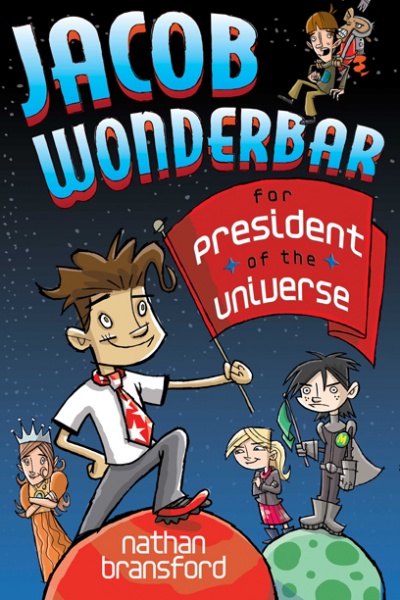
Now that my taxes are filed and I have a few days at home, time to catch up on a few things. First off, my pal Nathan Bransford's second book, JACOB WONDERBAR FOR PRESIDENT OF THE UNIVERSE, is out! This is a fabulous middle grade series, reminding me a bit of Douglas Adams and Roald Dahl. Don't take my word for it--check out the trailer! And watch out for rogue space monkeys...

Tomorrow I will attempt an actual blog post on my recent adventures...

Tuesday, January 24, 2012

Monday, November 28, 2011

Cyber Monday Website Extravaganza!!!


New pages! New covers! Music! Prizes!

Er, actually, I don't know about the prizes. I guess I would have to have a contest of some sort for that. Any suggestions? I have an autographed copy of ROCK PAPER TIGER I could kick in.

What I definitely do have is a lovely revamped website to reveal! Check it out! lisabrackmann.com! Yes, you may have been there before, but it's newer! Shinier! And multi-media-rrific!

From the books page you can navigate to the page that's all about my upcoming novel, GETAWAY (hmmm, maybe an ARC of that. What do you think, Soho Press?). You can also check out the grand reveal of YEAR OF THE TIGER, which is ROCK PAPER TIGER in British! (my UK editor hastens to add that the actual cover will have "blingin' gold foil" on it—I can't wait!...hmmm, maybe a copy of YEAR OF THE TIGER would make a nice prize...I don't have one yet, but I will...)

Finally, something completely different...music! Yes, actual MP3-quality music! Written and sung by me! (and played by some truly talented musicians)

Many thanks to my wonderful web designer, Ryan McLaughlin of Dao by Design for his typically fantastic job!

Tuesday, November 08, 2011

Returning to Earth...

Greetings! Okay, that was a longer posting hiatus than I'd intended. But I think I've taken my last major out of town trip for the year, so, time for a catch-up.

Bouchercon was awesome! What can I say? All the cliches about how writers spend all this time alone in front of computers, talking to themselves in character, then getting let out and getting together en masse, and there are parties, and a bar?


Okay, well, it's possible that there may be some truth to these cliches.

I had a wonderful time. I have to say, hanging out with the Soho Criminals is something I would love to do more than once a year. What a great bunch of folks all around! I'm only sorry that I missed the bowling tournament. Next time, I swear...

Also, I really enjoyed St. Louis. Let it be known that for all the travel I've done in China, I have barely been anywhere in huge swathes of the United States, the midwest in particular. I was pleasantly surprised by a lot of what I saw — the downtown still shows a lot of signs of economic distress, but they are trying. So many lovely old buildings being repurposed and so many more waiting to be revamped and enjoyed. There are good restaurants and bars—

(this is The Bridge Tap House)

—a wonderful bookstore, Left Bank Books (and while I'm on the subject of bookstores, another great one there is Big Sleep Books)

—the amazing Old Post Office—


—and of course, the Arch!


Everybody told me I needed to see the Arch, and that moreover, I should watch the documentary they show there on the making of it called MONUMENT TO THE DREAM (here's a trailer).

"Everybody," in this case, was right. The Arch impressed me on many levels. I loved the simple, elegant design. Loved the weird, diver-capsule-like elevators that haul you to the top. And the view is wonderful.


The documentary, too, was fascinating, focusing on the tremendous design and engineering challenges the Arch posed, and the impressive work of the builders and crew in meeting those challenges.

Watching it was unexpectedly poignant. It reinforced some things I'd been thinking about, a lot. We no longer seem to build great things in this country, not like that. We don't build factories, universities, high speed rail, infrastructure—we can't even maintain what we have.

We sure don't build grand and beautiful monuments.

In my passing through Saint Louis, especially when I took the train to the airport, I saw so many shuttered factories...beautiful red brick buildings. Empty. Stripped of their useful machinery, the remains of it rusting.

Plenty of people have warned about the dangers of basing too much of an economy on FIRE: "Finance, Insurance & Real Estate," and I'd add to that, "Empire." Our economic crash and prolonged recession/depression would seem to be proof enough, though in truth, if you look at the growth of income disparity over the last thirty years, it's a crisis that's been years in the making. But with the crash, we can't hide from the truth any more, that we're living in an empire in decline.

It's a good thing, to be out of denial, and as hard as the forces of reaction and repression continue to push their "divide, conquer and privatize" agenda, the public dialog has changed, and they know it. We can thank Wisconsin and Occupy Wall Street for that, for giving voice to what so many people have experienced and discussed in private, or even publicly, but without a rallying point to give our voices traction. It's no longer possible for pundits to sputter unopposed about "the left and class warfare" when it's now abundantly clear who has been waging war on whom.

Anyway, I have more catching up to do, but I think this is enough for one post...

Saturday, September 10, 2011

Bouchercon!

But first...

The West Hollywood Book Fair is coming up on Sunday, Oct. 2nd. I'll be there on a panel with some wonderful authors: Dianne Dixon, Tim Hallinan, Ryan David Jahn, and Thomas Perry, moderated by Wendy Hornsby. Our panel, on literary thrillers, is at 11:30, but there are great panels and events going on all day, and it's free! If you're in the Los Angeles area, I hope you'll stop by.

Now, where was I?


Right! The Bouchercon! Bouchercon 2011 is in St. Louis, a city I've never visited. I hear they have great barbecue...

I'm on two panels, the first on Thursday at 4 PM, "SEMPER FIDELIS-Landmark 1,2,3 Crime fiction & the military. Where the two meet. Matthew C. Funk (M), B. Kent Anderson, James R. Benn, me, Martin Limon, Charles Todd," the second on Saturday at 1 PM, "NEVER LET ME GO-Majestic A,B,C Passport to murder. Peter Rozovsky (M), Lisa Brackmann, Roger Ellory, David Hewson, Martin Limon, Anne Zouroudi." My wonderful publisher, Soho Press, is also hosting a cocktail party on Friday at 4:30, to introduce Lene Kaaberbol and Angnete Friis, authors of the international bestseller THE BOY IN THE SUITCASE—I've read it, and it's an awesome book! I'm told there will be ARCs for some lucky guests. I'll also be manning the International Thriller Writers booth from 12:30 to 2:30 on Friday.

I'm so looking forward to seeing old friends and meeting some new—if you're attending, feel free to tweet me!

Now I just need to get Shack By the Sea ready for my house-sitters...

ETA: New Event!

Just added—I'll be at the Paragraph Party hosted by Left Bank Books. Check out this lineup: "Chelsea Cain will be the Mistress of Ceremonies for the evening, and paragraph-reading guests include Cara Black, Tasha Alexander, Eoin Colfer, Deon Meyer, Daniel Woodrell, James Benn, Peter James, Stuart Neville, Paul Doiron, Marcia Clark, Martin Limon, Dana Haynes, Leighton Gage, D.E. Johnson, Lisa Brackman, Gianrico Carofiglio, Judith Rock, and Nancy Means Wright." We'll all be reading a paragraph, just one, from our latest work. And then we'll sit around, sign books, chat and drink beer, because the party's being held at the Bridge Tap House & Wine Bar. How cool is that?

Monday, August 29, 2011

9/11/11


We’re approaching the tenth anniversary of 9/11, and I’m dreading it. The last few years, I haven’t marked the event. I was sick of it all. I just wanted to forget the date, forget the tragedy, forget about what it did to this country and to the world.

But it’s the tenth anniversary, so I guess there’s no avoiding it.

What did 9/11 bring us? Let me count its gifts:

A decade of wars. Wars we’re still fighting. The sacrifice of thousands of soldiers, I’m not sure for what. The deaths of countless civilians in those wars. Maybe we could have counted them, but we didn’t. Collateral damage. Stuff happens, right?

A society that’s become increasingly militarized, a nearly unquestioning worship of things military and not so much real martial virtues as the virtue of power, of might, of overwhelming force—how much pain you can inflict. Kick ass, baby!

A government that has shredded our Constitution, legitimized torture as an instrument of national policy, deemed indefinite detentions with no due process a necessary weapon in a “War on Terror” that has no end.

An economy where we can’t afford our basic social safety net. Where universal programs that we all paid into are routinely derided as “entitlements.” The social compact that led us to pay our share seemingly no longer valid. Where economic gurus and corporate think tanks have elevated Randian sociopathic selfishness to national policy. The devaluing of all things “public,” of shared resources, of the Commons.

Where we can continue to spend billions on our military but can’t afford to repair essential infrastructure, to encourage domestic manufacturing, to put our people back to work. Unless of course they’d like to join the military. Convenient, that.

Where it’s perfectly okay to force the wages of labor down to levels where parts of the US have become Third World manufacturing centers for First World countries like Germany, where we’ll be competing with China on the global market by 2015—thanks to the cutting of wages and benefits and social programs.

Where we can’t afford a national industrial policy but can continue to rely on an economy built on a financial house of cards, on esoteric stock market betting schemes, on insurance, on real estate, on speculation.

Where it’s also perfectly okay for corporations to be people and buy our politicians, where income inequality is greater than it was than in the Great Depression and in fact more closely resembles Banana Republic levels than many actual Latin American countries at this point. Where the top 1% controls more than 42% of the wealth.

Where the response to the financial crisis and staggering long-term unemployment rates has been to bail out the responsible parties and insist on austerity for everyone else.

We won’t raise taxes on billionaires, or on corporations that ship jobs overseas, but we will cut off unemployment benefits because they “make people not want to get a job.”

Where “we can’t afford it” becomes the excuse to sell off public land and public resources and public institutions and put them in the hands of private entities with no accountability to the public.

(it was almost comical to read of threats to cut disaster aid and hurricane tracking as a monstrous hurricane bore down on the East Coast. You know, “sacrifices must be made”)

Where we’re asked to accept the opening up of every last pristine place, risk countless environmental catastrophes like the Gulf spill and the unleashing of one last carbon bomb in the form of the Keystone XL Pipeline. Where somehow building mass transit to deal with a future where gas isn’t cheap and developing a green economy that could employee millions is “socialistic” but subsidizing dirty oil companies is the free market in action.

Where we desperately need health care reform and instead get an insurance and pharmaceutical industry bailout, and the few reforms in it are fought against tooth and nail, because, again, “we can’t afford it.”

Where people voted for a President who promised them hope and change, and delivers the same old shit.

I look at the fruits of 9/11 and I see fear, selfishness and mindless aggression, except maybe it’s not “mindless.” All of this stuff has been happening over the last thirty years (at least—we can argue about the starting point); the economic policies that have driven it put into play piece by piece, justified by a propaganda machine that has subsumed the great majority of our mass media, gutting our journalistic institutions while encouraging the rise of religious zealotry, ignorance and hate.

But 9/11? That was the final push. The “Shock Doctrine” in action. Everything needed to dismantle the remains of a republic and build in its place a national security state, a plutocracy designed to funnel the wealth of a nation into the hands of a few.

Osama must have died a proud man.

I used to be good at seeing the future. I looked at where we were heading as a society, thirty years ago, and mostly didn’t like what I saw. Unfortunately, I can’t say that much has surprised me.

Now we seem to have reached an endgame of sorts, and I can’t see what’s ahead. Or I don't want to.

We're at that point where it could go either way.

How do we step back from the precipice? Is it even possible?

Where do we go from here?


*******************************************************


Some disclaimers:

I am not reflexively anti-war. I have some sympathy for the liberal interventionist argument, and when a person as knowledgable as Juan Cole makes a case for NATO support of the Libyan rebels, I'm willing to listen.

Iraq? There was and is no justification for it.

I am not anti-military. I believe the highest honor we can pay our soldiers is to not waste their lives in unnecessary imperialist adventures.

I think government could be far more efficient—I believe in the principle that any large organization inevitably develops institutional goals that can interfere with its original mandate. But in principle, in a republic, government is accountable to the people who established it and who elected its officers. Corporations have no such mandate, and the idea that everything has to be subordinate to short-term corporate profits, and that this will somehow result in the greatest good for the greatest number, is ludicrous. There's no such thing as the "Free Market," and capitalism needs to be balanced by social justice and some notion of the common good. You know, "Promote the general welfare" — it says so in the Preamble to the Constitution!

Some links:

If you are not familiar with Naomi Klein's "The Shock Doctrine," read this — essential for understanding the times we live in.

The US, where Europe comes to slum...

American income inequality: here, here and here...

On the Keystone XL pipeline—here, here and here.

Disaster aid tied to spending cuts.

Senator Kyle on unemployment.

Finally, for some optimism...

Thursday, August 18, 2011

Gear Review! CHINA SURVIVAL GUIDE by Larry & Qin Herzberg


Given my obsession with travel gear, and the fact that I'm, well, a writer, it makes a certain amount of sense to expand my Gear Review to travel guides. A good one will make your trip immeasurably easier; a bad one is worse than useless—it's like asking directions of some weird old dude who insists your destination is just down the road apiece, right over that way, when he doesn't have a clue what he's talking about, and you end up miles from where you want to be.

I was recently asked if I'd take a look at CHINA SURVIVAL GUIDE, by Larry and Qin Herzberg. The first thing you need to know about this book is that it is not a guidebook per se. It won't tell you what sights to see and what hotels to stay in and how much you should expect to pay for them. Instead it's a compact tutorial on China travel basics—important stuff like etiquette, standing in lines, what to expect in hotels, shopping tips, taxis do's and don'ts. And, oh yeah, spitting.

I actually learned a few things I didn't know. The chapter on hospitals I found particularly illuminating. And I very much appreciated the authors' good humor (comparing crossing a Chinese street to a game of Frogger, with the pedestrian as the frog), optimism and overall good-heartedness and spirit of adventure. I think the most useful information this book provides is a sort of basic mindset best suited to enjoying and appreciating your China experience.

That said, I think there is room for a few improvements.

The authors warn that given the incredibly rapid pace of change in China, it's hard to keep information up to date, and that holds true here. Even though this edition is advertised as fully revised, some of the information seems outdated (for example, in my experience you can find ATMs where you can use access your non-China funds just about everywhere, including provincial Guizhou). Some of the anecdotes included to illustrate the authors' points are from over 20 years ago, and while I found those stories interesting, amusing and a way of illustrating just how much things have changed in China in a very short amount of time, I'm not sure that they are the best way of talking about situations that travelers today are likely to experience.

As an example, in the chapter "Mass Protests and General Mayhem," Larry details some of his experiences leading a student tour that coincided with the Tiananmen Uprising. I found this very interesting, but I wondered where the discussion was on the sorts of demonstrations and "mass incidents" one might witness today. There was none, and in a country where there are frequent public protests over things like, polluting chemical factories, illegal land seizures, and general citizen anger with corruption and an unresponsive government, I'm not sure that recounting a Tiananmen experience is the best choice in discussing the types of protests that a foreign tourist could conceivably encounter. The reality is, most foreign tourists won't encounter any, but I think if you are going to raise the possibility at all, then you should be prepared to discuss current Chinese realities.

And this was a place where I felt the book was both very good—the realistic depiction of the sometimes chaotic public environment versus the incredible warmth one experiences on a personal level—and curiously lacking. Two sentences in particular stood out to me:
One benefit of an authoritarian state like China is that this is a government that knows how to maintain the rule of law and public order. There is simply no other practical way to run a country of 1.3 billion people, even if in Western eyes that means greatly curtailing individual civil liberties and human rights.
There are so many problems with this assertion that I can hardly begin to unpack it here, but I'll start with the idea that China has a consistent rule of law at all. It simply does not. China has a "Rule of Laws" that is unevenly enforced, frequently contradictory and twisted to fit the needs of the powerful, and that, at the end of the day, is subservient to the CCP.

Here's the thing: I don't think that a "China Survival Guide" really needs to delve into these controversies. But don't make that kind of statement if you're not willing to devote way more time to backing it up.

Instead, where's the chapter on train travel? Enquiring travelers want to know!

(image from last week's Dalian protest)

(FTC DISCLAIMER: the publisher provided me with a free copy of this book in the hope that I might review it)


Saturday, July 09, 2011

Upcoming Events!

This has been a busy year for me, both travel and event-wise. I just got back from New York (fantastic!) and I haven't even written about my trip to Ashland yet (awesome!). But before I sit down to write anything complicated, here are the rest of July's events (more detailed information on my calendar):

July 14: I'm at the Wiseburn Library in Hawthorne, 7 PM, with a bunch of awesome mystery authors from Sisters In Crime—Eric Stone, Hannah Dennison and Jeri Westerson—authors' books will be on hand courtesy of Debbie Mitsch's wonderful Mystery Ink! We'll be discussing the use of foreign settings in crime fiction, outsider versus insider protagonists, historicals, research, accessibility, and, you know, a lot of cool stuff!

July 20: I'll be discussing SAN DIEGO NOIR at the San Diego Central Library at 6:30 PM, along with editor Maryelizabeth Hart and contributors Jeffrey J. Mariotte, Martha C. Lawrence, Ken Kuhlken, and Diane Clark!

July 22: I'll be at the San Diego Comic Con on a panel discussion of "Crime as modern morality tales" at 12:30 PM with so many authors I don't know if I should even try to list them but what the hell...

"Max Allan Collins (Kiss Her Goodbye, The Nate Heller series), Barbara Collins (Antiques Knock-Off), Jeff Mariotte (CSI: The Burning Season), Diane Clark and Astrid Bear (San Diego Noir), Gar Anthony Haywood (Cemetery Road), Gary Phillips (Angeltown), Paul Malmont (The Astounding, the Amazing, and the Unknown), Lisa Brackmann (Rock, Paper, Tiger), and Gregg Hurwitz (You're Next) explore the dark streets of imagination with San Diego Noir editor Maryelizabeth Hart. Room 8"
And we'll all be signing in the autograph room after that.

Finally, rounding out my July on July 30th, I'll be signing and chatting at the Manhattan Beach Barnes & Noble, from noon till 2 PM? Ish? We get tired? Not sure.

As for August, I plan on sleeping. A lot.

Monday, July 04, 2011

Off to New York!

My house and cats are in the hands of a sitter, and I'm heading for NYC shortly on a red eye*, the excuse being that ROCK PAPER TIGER was nominated for Best First Novel in the Strand Magazine Critics Awards, and they're throwing a party. I really don't expect to win (I mean, look who I'm up against!) but I'm thrilled to be in such fine company.

This will be my first trip to New York in years, and certainly my first trip as a published author. I figure, I'm getting a bit of a late start on this career, and I want to enjoy every moment of it. Well, the moments that don't involve obsessive angst over comma placement and "like" versus "as if."

I'll be meeting with writer friends I know only from the interwebz, and I hope to visit some of the fine people I work with at Curtis Brown and Soho Press. Plus do a fair amount of strolling and sidewalk cafe sampling.

Can't wait!

(*my eyes are already soooo red from the copy edits)

Wednesday, June 29, 2011

Writer Friend Tim Hallinan*

(The latest in an occasional series, *with a HT to the fabulous Rejectionist!)

So a few months ago, I read on one of my regular blog stops that Tim Hallinan was coming over to Soho Press and bringing the next volume in his critically acclaimed Poke Rafferty series with him. I'd long heard of Tim and the series, which is set in Bangkok, but had been incredibly remiss about reading it. Still, I was excited to hear that he'd be a Soho label-mate, because as I've mentioned in the past, Soho is awesome, and it's exciting to have another wonderful author published by one's publisher, because, through the transitive law of logic, if Soho is awesome, and Tim is awesome, and I am published by Soho, then that makes me awesome. Or something.

Tim read my book (I think it came in his "Welcome!" basket from Soho) and then wrote a lovely review of it. And since Tim lives not far from me in Los Angeles, and I'm making it a mission to meet as many writer-types as I can so that I'm not just sitting at home talking to myself (or the cats), we arranged to have coffee. And I was delighted to discover that Tim is indeed awesome, one of the funniest people I've met in years, and also extremely smart, thoughtful, and caring.

Case in point: his remarkable effort in putting together an anthology to benefit victims of the recent Japan earthquake and tsunami, SHAKEN. Go check this out, people. 20 original short stories written by some of the biggest names in crime fiction. I don't even want to give an example, because every single one of these contributors is top-notch. And 100% of the profits go to Japan relief, including Amazon's share. It's absolutely amazing, full of great reads, and for an incredibly worthy cause—and you get all that for $3.99.

But what about Poke Rafferty? Well, I got my hands on Tim's latest, THE QUEEN OF PATPONG. And...


It's wonderful. No joke. I mean, I should not have been surprised that a novel that was nominated for an Edgar Award (and more recently, a Macavity) is a good book, but my tastes don't always run with the crowd, and besides, QUEEN OF PATPONG is a book that sets out to do something with a high degree of difficulty—get into the history and head of one of the continuing characters, Rose, and her journey as a teenager from a countryside village to the bars of Bangkok. There are so many ways that trying to tell the story of a former Thai sex worker could have gone very wrong—I'll mention the tendency of some westerners (okay, some western men) to idealize the lives of these women (and in some cases their own participation in the exploitation), but this long section dealing with Rose's past is so compelling and so believable that I basically forgot about the thriller portion of the story and was in no hurry to get back to it.

But then when I did, well, I have to say, the ending is just killer. I don't want to give it away, but it's one of the most satisfying...er...no, I'm not going to say anything else. Just that it will make a great, great movie in your head! Go read it!

As I reflect on my experiences post-publication, I realize that one of the true pleasures of this gig is getting to meet other authors, and meeting Tim has been a real highlight.

Do check out his work—it's not just good, it's also worthwhile.

Saturday, June 04, 2011

New SAN DIEGO NOIR events! And off to Oregon!

I'm doing a couple more events for SAN DIEGO NOIR — the first at the wonderful Bay Books in Coronado on June 23rd, the second at the Ocean Beach Branch of the San Diego Public Library on June 25—I don't have a time for that yet, but since it's Saturday, I'm assuming during the day.

Two things writing this brief post made me think about...

First, independent bookstores are awesome. You've probably heard me say that before. I had such a great time at the Mysterious Galaxy Birthday Bash—an event like this, where literally hundreds of loyal customers turned out to celebrate Mysterious Galaxy, its role in the community, in bringing authors and readers and books together, really brings home the value of local bookstores. Bay Books is another San Diego treasure—an absolutely lovely store on a charming street that's well-worth a visit and a stroll.

Second, libraries are awesome. And you've probably heard me say this as well. I just did a quick scroll through the San Diego Public Library's events calendar. My event isn't posted yet, but have a look anyway. The incredible diversity of the offerings is something we should all be celebrating. Libraries are repositories of our collective knowledge and aspirations, and they are centers of community—the values and resources that we hold in common. The opportunities that libraries provide all citizens, particularly those who are poor and struggling, are absolutely invaluable.

We're living in a tough time, and it's more than the bad economy. I'd call it an almost spiritual crisis (and I'm not religious). It's a collapse of the notion that we have a commons, places that belong to all of us, that we all support and that support us in times of need. Libraries, parks, schools, wilderness: all these are a part of our commons, things that shouldn't belong to individuals, but to all of us, and to our children and their children to come.

(I'd add in health care, a social safety net and a secure retirement, but I am trying to step off my soapbox, so...)

Er, Oregon. First stop on June 7, Powell's! After that, Klamath Falls, Ashland and Medford! Check my events calendar for information...hope to see some of you along the way...

Tuesday, May 31, 2011

Strangers on a train...pt. 3


(Part 1 and Part 2).

Regular readers of this blog know that trains are my preferred mode of travel in China. I like trains because I can see something of the country, because I can get up and move around, read comfortably, use a toilet when I need to.

But mostly, because of the stories I get out of every ride.

Submitted as an example: the trip from Kaili to Kunming.

Richard and I had been stymied in our attempts to take the train from Nanjing to Guiyang and from Guiyang to Kaili. We were determined to at least take the train to Kunming. For that, we were told, we would have to go back to Guiyang -- though Kaili is on the rail line from Guiyang to Kunming and actually closer to Kunming than Guiyang, sleepers were always sold out by the time the train reached Kaili.

Except this once.

The lovely folks at the Kaili China Tourism Office, who had been among those telling us that getting sleepers from Kaili was impossible, had somehow managed to secure two berths for us, so we wouldn't have to double back to Guiyang. Nothing against Guiyang, but, you know, not the most interesting place I've ever visited.

We got to the Kaili train station, and understood why everyone had told us, it was "a little chaotic." The Kaili station is a pretty typical, old-fashioned small town station. You wait for the trains on the upper floor, which was standing room only:


EXCEPT right up at the front of the line, which was a posted "No Smoking" area, and therefore undesirable.

The train arrived. We made our way to our assigned car and presented our tickets to the conductor, a young, pretty woman (most of the conductors are young, pretty women. I am reasonably sure that this is a factor in their hiring).

Her brow furrowed. "Xiao wenti," she muttered. "Buhao yisi..."

There's a little problem. She's so embarrassed.

We have a pretty good idea where this is going...

No sleeper car. There would be berths in a few hours, so we'd have a place to sleep. "Not a problem," I said. "Just give us some place to leave our luggage, we'll go to the dining car and drink beer for a few hours."

This apparently would not do. The conductor asked if we would mine splitting up and staying in separate compartments—we could change to the same one later on the trip.

Fine by me.

I was ahead of Richard in the corridor that runs along the sleeping car, so I said I'd take the further compartment.

Walking in, my first thought was, "Boy, did I make a mistake."

My compartment mates: 3 middle-aged Chinese men.

Now, I have nothing against middle-aged Chinese men (I am pretty much in the "middle-aged" demographic myself) except for one thing, in this context: they snore. I don't know whether it's because so many of them smoke, but count on it—three middle-aged guys in a compartment, odds are overwhelming that at least one of them, and more likely two, will snore. Loudly (I have a convenient Snoring Magnitude Rating system, in which two Category 3 snorers are equivalent to one Category 5 snorer, and so on).

Well, I don't take trains in China for the good night's sleep. I smiled, shoved my bag under the lower bunk, put on my train slippers and tried to look inconspicuous.

That wasn't gonna happen.

This was a very chatty group, especially the fellow sitting across from me, a government official from Hunan. I immediately got hit with the questions: how long had I been in China, where did I learn to speak Chinese, what places had I visited, what did I think about China, etc. etc. etc. Another man joined us, a young guy with shoulder-length hair and a John Lennon T-shirt, from Wenzhou. With his accent, I had a hard time understanding him, which was too bad because he was very interested in talking to me.

The government official had traveled to the United States—either during the time of swine flu or in some capacity related to swine flu (#ChineseFail on my part). He'd been to Boston, to Washington D.C., to San Francisco, even to the Grand Canyon. Had loved the experience! And he'd learned a lot, particularly that, in his estimation, "America is much more developed and wealthy than China. It will take China thirty years to catch up!"

"Thirty years?" the young guy from Wenzhou said with a snort. "More like three hundred years! And do you know why? Because Chinese people have no freedom, that's why! Take your President Bush..."

"Heh," I said. "Yeah. I don't like him."

John Lennon T-shirt wagged his finger. "You see? You are allowed to say this. We can't say these kinds of things about our leaders. You have elections, we don't. That's why China can't catch up to America."

You'd think there would be a lot of argument about this, or fear, or something, but no. Some chuckles, some nods. And then a discussion about my iPhone: which generation is that, third or fourth? How much does it cost in America? That cheap, really? (I tried to explain that the low price for the device came with a commitment to a lengthy contract but am not sure that I managed to get my point across)

I think about 20 minutes had passed before Richard poked his head in the compartment. I gave him the recap: "Official thinks China will need thirty years to modernize, John Lennon T-shirt guy from Wenzhou thinks it will never happen because Chinese people have no freedom. And iPhones are expensive in China." He sat.

A few minutes later, the same conductor who had looked at our tickets in the first place came by. Richard turned to me: "She totally gave me the third degree just now." On certain train routes, conductors will swap your paper tickets for plastic ones (and then back again at the end of the ride), and along with that, ask for your identification and if you're a foreigner, your passport. Her interaction with Richard had gone far beyond that: she asked all kinds of questions, about how long he'd been in China, where he was traveling and why.

Now she leaned against the doorway of our compartment. She saw my hand-made Chinese notebook and asked if she could look at it (it has all kinds of vintage images of Chinese leaders taken from old Newsweeks). Where had I bought that? And my postcards, from Guizhou, could she see them? She examined each image (I hadn't filled them out yet). We decided she was not so much about the third degree as she was curious. And chatty. She was from Kunming and had a lot of ideas about the best restaurants there (she wrote them down in my notebook, with my pen, which she also thoroughly examined).

This was a happy train, overall. Even the surly dining car attendant was giggling when I returned there after hours to buy a bottle of water—there she was, giving one of the train workers, a big guy with a big shaved head, a scalp massage, and she waved in greeting along with the others, wished me a good night when I left. Maybe it's that Guizhou vibe I mentioned, that just passing through is enough to make people weirdly friendly.

While Richard dealt with the world's friendliest, most adorable attack toddler in his compartment (he was fascinated by Richard's bag and glasses), I settled down for the inevitable night of snoring.

Sure enough. The quietest man in the compartment, the guy on the upper bunk who during our conversations had mostly listened, smiled and nodded.

I'd put him at Category 4.

Early the next morning, as we approached Kunming, John Lennon T-shirt came by. "How did you sleep?" he asked me.

"Hai keyi," I replied. Okay/so-so.

A few minutes later, he returned, to give me an energy drink and a pastry.

Thursday, May 19, 2011

Gear Review! (second in an occasional series)

(The PR-5, Skytrain and Tilley, on the road...oh, and my PJs)

I have one more post that I want to put up about my recent trip, another of my adventures on Chinese trains (and if anyone wonders why I love to take trains, in spite of some hassles, it's because I swear, I get a story out of every ride). But first, it's time for...GEAR REVIEW!

Some of you who know me, know that I'm slightly obsessive on the subject of luggage and bags. Okay, maybe more than "slightly." It's just, with all the travel I've done in the last few years and all the walking I do normally, I'm dealing with bags all the time, and they have a big impact on my life. Trust me, you do not want to be dragging an awkward, cheaply made bag on and off Chinese trains and through train stations.

I came to the conclusion that I wanted bags that were functional, sturdy and easy to schlep. For all of those reasons, I went with Red Oxx. I wrote about my experiences with Red Oxx in my earlier gear review. Since then I've added a few new bags (I don't have a problem, I can stop any time) and have had plenty more experience with the old ones.

(Red Oxx Skytrain)
My workhorse remains the Skytrain. It has been with me on many trips at this point and I can't see a sign of wear. I know that a lot of people are partial to wheeled luggage, and I understand why, but a soft-sided bag like this is easier to cram into tight spaces (overhead compartments, under train seats), and much easier to maneuver when trying to stow over your head, get on and off of trains and planes and up and down staircases. Just don't overload it with heavy stuff, because as sturdy as this bag is, it will support whatever you manage to cram in it.

For my second bag, I got the PR-5. This is another maximum-sized carryon, and it holds a ton of stuff. I find the outside end pockets particularly useful for stowing a pair of shoes (in one) and whatever I want quick access to (in the other). This series of bags also has a passthrough pocket, so if you are using any wheeled luggage or luggage rack, it will slide over the handle. It's actually easy to carry for a shoulder bag; the Claw shoulder strap distributes the weight surprisingly well.

(The PR-5)

I took this larger duffle because of the extreme range of climate I covered in this trip and also the possibility that I'd have to dress nicely on a few occasions. It's just a great bag. But for shorter trips when you don't need that kind of capacity, I love my PR-4. This smaller duffle fits perfectly under airplane seats, and again, the handy end pocket is a great place to put items you want to get at easily during your flight.

(the PR-4)

As mentioned in my earlier review, Red Oxx products are made in the USA and guaranteed for life. Yes, they cost more than a lot of luggage, but you will never have to buy a replacement, and you'll never find yourself dealing with a broken zipper at some inconvenient moment on the road. Their bags come in twelve nifty colors, so you can express yourself too!

Least you think all of my luggage love goes to Red Oxx, let me plug a couple of other useful bags.

First, Patagonia's Travel Tote. I have an older version of this bag that has seen many trips and much hard use and was finally showing signs of wear (for a lightweight, packable bag, these things are pretty damned sturdy). So I upgraded to their slightly revamped current model. The major improvement is longer straps so you can sling the bag over your shoulder when you don't want to use it as a backpack. This is an extremely practical, versatile bag that I'd recommend to any frequent traveler—I honestly can't imagine a more useful alternative for a travel utility bag to this.

(Patagonia Travel Tote, with backpack straps stowed)

I'm not a "purse" person nor am I into briefcases, but there are occasions when I need something to fulfill those functions—going to a meeting, a conference, what have you. For this, I chose a custom Timbuk2 Messenger bag. Like Red Oxx, Timbuk2 products are made in the US (in San Francisco), and come backed with a beefy warranty. Plus, they're cool-looking. I customized mine and had a lot of fun choosing the fabrics and features. The small Messenger is just wide enough to stuff an extra sweater and a larger digital camera (with a standard lens) — it's a tight fit, and not ideal (in fact, Timbuk2, if you're reading this, a little bit of extra width on the Small Messenger would be awesome—the Medium is just too big), but I did it. If the trip had been more about photography, I would have considered taking my Red Oxx Gator instead—its width and padded bottom make it perfect for that (as well as fitting under an airline seat). But those same qualities make it less than ideal for carrying around town to meetings or for use as a "purse/briefcase," so I went with the Timbuk2.

(Timbuk2 small messenger bag)
Two more items that have become permanent parts of my travel repertoire: a Tilley hat and an 11" Mac Air.

Tilley's are made in Canada, high-quality, functional and even look kinda cool. Plus, they come with a great warrantee and a secret pocket! I have the Cotton Airflo. Yeah, not cheap, I know. But I walk a ton, and I'm not always as good about putting sunscreen on as I should be (it gets in my eyes), and this hat is about as comfortable and practical as they come.

Finally, the Mac Air.

I write, blog and post photos when I travel, so a laptop really is pretty essential. And, yes, I'm a Mac person. I tried using a Linux-based netbook once, and while I'm sure Linux is just swell, I really didn't want to take the time to learn to use it, plus I wanted to use the same system to upload photos and keep my stuff so it was easily transferrable. Plus, Windows in China is asking for trouble, given the proliferation of viruses and spyware. For a few years, I traveled with an old 12' iBook. Kudos to that thing for sturdiness and long-life—it still works! But it's just a brick. You don't think so, at first, but after a month-long trip with constant travel, it starts absorbing the weight of the road, I'm pretty sure.

Then the new Airs came out. Wow. This is the perfect road warrior for Mac people. It uses flash memory instead of a moving hard drive, so it's sturdier. It's incredibly light. Incredibly thin. And it's a lovely piece of machinery that's a pleasure to work on.

Caveats: I got the stripped-down version, straight out of the box. It does not have a ton of memory or RAM. It does not have a CD/DVD drive. You can get models with more memory (but you have to order it that way, they are not easily upgradable) and you can order a compact exterior DVD drive if you want to have one. For me, none of this was an issue—I wanted a laptop designed for travel that I could use for writing and photos, and it does those things wonderfully well. In fact it's so nice to use that, well, I'm using it right now (light! Amazing screen! Great keyboard!).

Another small item you will want to invest in: the Air has two USB ports and one Firewire port. There's no room for anything else. That means, no Ethernet port. But you can buy a little adaptor that plugs into the USB port for your Ethernet needs. Many inexpensive Chinese hotels offer broadband access in their hotel rooms, but it's via Ethernet. I got my adaptor at an Apple store, but Amazon offers them too.

(one more thing: Mac Airs don't like Adobe Flash very much. I downloaded a simple, free program called "Click-To-Flash" — I highly recommend it).

One final item you will want if traveling to China, or to anywhere where you have reason to believe that internet security/accessibility is an issue: a VPN. Even with Witopia's excellent product and great customer service, China's Great Firewall makes internet access a huge pain in the ass at times. But I wouldn't consider traveling to China without one. When the Chinese government decides that Gmail is subversive and tries hacking into it? Yeah, I want a VPN.

Well, I think that's it for this year's long, somewhat tedious and obsessive gear review. Other travelers, please feel free to add your tips and favorites! I'm always ready to feed the obsession!