Sunday, March 24, 2013

Beating a Dead Pig...


(originally posted on Murder is Everywhere...)

Shanghai is a pretty amazing city. A lot of it looks like this:


And this:


(these are a couple years old, taken right before the '08 Olympics, so trust me, it's even shinier now)

The city boasts one of the largest subway systems in the world, built mostly over the last decade. Shanghai is China's business and economic center, a global city. It really is not the kind of place where you'd expect to find 9000 dead pigs floating in a river that supplies the city's drinking water.

The pigs apparently came from a town upriver called Jiaxing, a center of pork production. Farmers there don't have the land to bury diseased pigs, so dumping is a common solution. The pigs supposedly died from porcine circovirus, which does not threaten humans. The water supply is perfectly safe, say city officials. In fact, the pigs being dumped actually is a step forward for Chinese food safety, according to the New York Times -- in the past, pigs that had died from diseases frequently ended up sold for meat on the black market and on peoples' tables. 

There have been so many food scandals in China in recent years (sewer oil, fake eggs, fake walnuts, adulterated baby powder, etc. etc. etc.), but this one seems to have struck a particular (gross) chord.


I'll spare you the disgusting photos and go right to the jokes.

A popular choice was parodying the recent Ang Lee film:


Tea Leaf Nation, a site that provides translations of Chinese social media, had this one: 
@淮安老蒋 tweeted on Sina Weibo, China’s Twitter, “Shanghainese people are happy indeed. They pay for water but can drink pork soup!”
 A variation on that joke reported on Shanghaiist:
Beijinger: "We Beijingers are the most fortunate, we can open the window and have free cigarettes." Shanghainese: "That's nothing, we turn on our faucets and have pork chop soup!"
Managing to hit both this scandal and the horrendous air pollution that blanketed Beijing earlier this year.

In the past, the choice has been economic development at the expense of the environment, but now China's ecological crises are so severe that they not only threaten China's economic development, but the social stability of the nation itself. These are issues that unite Chinese across class, location and profession, poor farmers and wealthy urbanites alike. The new administration knows it has to take steps to improve food safety and the environment, yet somehow not throttle back development that keeps the masses employed. One good sign is the front-runner for the position of environment minister, Pan Yue, the former Deputy Director of China's State Environmental Protection Administration. Pan Yue used that office as a bully pulpit, taking on powerful state-owned companies and local governments that polluted with impunity before being shunted aside in 2008. Now he's back, and the question is, will SEPA be given the budget and enforcement power to actually do its job.

And it's a big job. You not only have to fight special interests with ties to the CCP leadership, you have to take on a society where far too many are willing to risk the health of others to make a profit. The lack of trust is frequently cited by Chinese as one of the biggest problems in Chinese society. I have to wonder, at what point are these social bonds frayed past breaking? As one China netizen put it: "The environment around us, and the society we live in, are rotting away just like these pig carcases.” The Central Government has maintained a broad popularity in China (unlike local governments, which are often despised for their more visible corruption), but faced with CCP members dressing up in Pucci, Burberry, Hermes and Armani for the annual "Two Meetings," I wonder also how well that popularity will hold up.


It will be interesting to see how incoming President Xi deals with all of this. 

By the way, his wife, Peng Liyuan, is a famous PLA folk singer and regular performer at the annual CCTV New Year's Gala. She apparently will take a more active role in Xi's administration than most Chinese First Lady's. One of her areas of advocacy in the past has been HIV awareness and education, and the hope is that she'll carry on that work. 

I bet you want to see her sing, right?

Okay, this video has nothing to do with the rest of the post. But I just needed to share it. Because I found it deeply weird...


Lisa...Sunday...

Saturday, March 16, 2013

Fun with books!


(originally published at Murder Is Everywhere, March 10, 2013)

Apologies for my tardiness, Murderous Ones...it's been a bit chaotic here at my temporary abode in San Francisco...good chaotic. But sufficiently so that, well, I forgot it was Sunday.

I'll explain: I've been at author events most nights of the last week. Definitely something I like about living here. So far I've attended one by Cara Black, at the wonderful Books Inc., celebrating the release of MURDER BELOW MONTPARNASSE:


(and by the way, you can win a trip to Paris with Cara!)


Next up was a visit to the fabulous Book Passage!  I was there to see Melanie Benjamin, whose latest novel is The Aviator's Wife, a fictional telling of the life of Anne Morrow Lindbergh (and NYT best-seller!):


And it's a good thing for my bank account that I had the event to attend, because otherwise I could have gotten into some serious trouble at Book Passage. It's not only an incredible bookstore, they have an entire building devoted to travel stuff. Books, hats, suitcases, accessories. Given that I have a, well, slight bag and hat addiction, this kind of thing is dangerous for me...

My third author event of the week -- one of Janet Rudolph's salons. Janet is the founder of Mystery Readers Inc. and editor in chief of that organization's Mystery Readers Journal. This month's guest was Sarah J. Henry, author of Anthony-winning Learning to Swim -- her new book is A Cold and Lonely Place.  This is a great atmosphere to talk to authors and readers, and I came away from the evening feeling as though I'd made some new friends.

My final event of the week (and the one that kept me out late last night): "The Traveling Circus and Snake-Handling Show," an evening of authors and musicians, with cupcakes! Popcorn! Prizes! This was a benefit for the Variety Children's Charity of Northern California sponsored by SF in SF and organized by SF/UF author Seanan McGuire (who is an awesome singer too!). Other authors included Amber Benson (yes, the actor who can also sing and has now published 5 books!) and Sarah Kuhl (author of "the geek romantic comedy novella One Con Glory"-- as a fellow girl geek, albeit one from an older generation, I'm really looking forward to her take on Con Culture). Their joint reading of the first chapter from Sarah's upcoming novel was hilarious. Truly. The whole night was a blast. I laughed so hard my muscles are sore today:


So, readers, that is my excuse for being late. I was having too much fun with books.


Wednesday, March 13, 2013

Thursday, March 07, 2013

Happy Year of the Snake!


I was born and raised in California, and I've always been happy about that. It's different here. I didn't realize this growing up, but culturally we're a lot more influenced by Mexico and Latin America and Asia than most other parts of the US (though this may be changing -- I take it you actually can get decent Mexican food in the Deep South these days!).

Chinese culture has been a part of California culture since the Gold Rush, and that influence has only gotten stronger in the last few decades with the huge influx of Mainlanders up and down the coast. Forget Chinatown--in Los Angeles we have an entire China Valley, a suburban sprawl of Chinese restaurants and businesses that includes Monterey Park, the US city with the highest percentage of Chinese Americans and just about any kind of Chinese cuisine you'd like, as good and authentic as anything on the mainland.

But I doubt if there's anywhere in the US where the Chinese influence is more bound up in a city's culture than San Francisco.

I love it. I've been staying in Outer Sunset, an area where many more recent Chinese immigrants have settled. There's a restaurant not far from here called "Mandarin Islamic," or in Chinese, “老 北京,” which actually translates to "Old Beijing," specializing in Northern Chinese cuisine, including my favorites, 羊肉串儿 and 孜然羊肉。Delicious! It's like Beijing, without the air pollution.

Tonight was a big night in San Francisco, the official Chinatown parade and festival to celebrate the Year of the Snake. And watching the parade, I really got a sense for how deeply rooted Chinese culture is in the civic culture here.


The Chinatown festival was a little disappointing. Lots of booths selling phone accessories and stamps and advertising cars, banks and other businesses, and not nearly enough snacks! Where were the dumplings? I was so craving dumplings. I retreated to the Comstock Saloon and had an Anchor Steam and a Po' Boy.

But I decided to stick around for the parade, and I'm glad that I did.

There were marching bands, and cable cars and vintage autos carrying local politicos. There were dragon dancers, and lion dancers. Lots of them.


Sponsored by elementary schools, high schools, martial arts organizations, businesses, government agencies. 


What I found particularly charming were the numbers of non-ethnically Chinese people who participated. Little blonde kids with Peking Opera makeup, Latino and black teens underneath the lions and dragons, big tall Anglo dads and moms walking behind the groups as chaperones, everyone setting off firecrackers and waving fuzzy toy snakes on a stick. 

It's a Chinese tradition, to be sure. But it felt like everyone in San Francisco's celebration.

I think it's what I love best about California. That we have this amazing wealth of tradition and culture here, and it's a bounty that we all can share. 

Maybe it's what I love about America, too. 

I think my favorite marchers may have been the Southwest Airlines ground crew following their float: 


After the parade, I caught the Muni back to Outer Sunset. My iPhone ran out of juice, or I would have gotten more and better photos. But waiting on the platform were a bunch of marchers from the parade.


Parents who'd been stilt-walkers, dressed in embroidered Chinese jackets and character costumes, civic workers carrying banners and 3-D cardboard signs of Muni trains, kids with their opera makeup and animal costumes. It was pretty damn cool.


Tuesday, February 26, 2013

Ordinary Places...


(originally posted on Murder Is Everywhere, Feb. 17, 2013)


(click to embiggen)

One of the consequences of a rising Chinese middle class is the huge expansion of domestic tourism. If you've traveled in China, you've probably seen one of these groups -- all wearing identical baseball caps, being herded from Point A to Point B by a guide, usually a young woman, with a pennant flag and a bullhorn. It reminds me a little of the old film, IF IT'S TUESDAY THIS MUST BE BELGIUM, though I barely remember it -- the way Americans used to travel forty years ago, in package tours.

I tend to do the opposite -- I travel a lot by myself. This marks me as somewhat eccentric, a woman traveling alone. There's a sort of enjoyable melancholy to solo travel, a kind of loneliness that's pleasant. It sounds like a contradiction, but I don't know how else to describe it. I move at my own pace, wander around, try to take the measure of the place I'm in. 

When I go to China, I usually visit at least one place I've never been. This last trip it was Tunxi, a small city in Anhui Province. Tunxi is best known as the jumping off point to visit Huangshan, "Yellow Mountain," probably the most famous scenic mountain in China. I had it in mind to go there, but the respiratory grunge I'd picked up combined with snow up on the peak made me think better of it. Instead, I mostly stayed in Tunxi. Tunxi rated a shrug from the tourist accounts I'd read, a small place, not a lot to see. It has a well-preserved Ming/Qing Dynasty section, "Old Street," and I'd gotten a room at a "boutique hotel" in a renovated building there.


If you've traveled in China, you know what it can be like in a shopping area aimed at tourists: countless exhortations to "Look! See!" and buy. Tunxi's Laojie wasn't like that. Tunxi's shopkeepers were happy to sell you something if you wanted to buy it, but they didn't try to rope you into it. Instead they played games with their kids. Joked and chatted with each other. Did their work. Well-tended pets, dogs and cats, lounged on the slab stone streets. 

Since I wasn't feeling 100% and I had some work to do, I spent a lot of time in coffee houses/bars doing that. I was a little surprised that Tunxi had a bunch of cute places like this, given that it was supposed to be kind of a boring provincial backwater. 


One of the coffee house owners was a guy originally from Beijing. He'd come down to Tunxi, he told me, because there was more genuine traditional culture left in Anhui. "You should go see Hongcun and Xidi," he told me. These are World Cultural Heritage sites that were used as locations in CROUCHING TIGER, HIDDEN DRAGON. "You can really see some of old China there." The other thing about Tunxi? "It's more relaxing here."

(my pal Wan Wan, a happy Tunxi cat)

That's basically what I did -- relax. Take the time to see what Tunxi outside of the tourist center was like. 

Fantasy China looks like this: 

(Hongcun, and it really is that pretty)

Real China? More like this:


I spent some time wandering around where the locals shop. In the big cities, you'll find fancy malls, designer stores, all the brands you're used to. In a place like Tunxi, you're more likely to find something like this:


I did make it out to Hongcun, where I spent an enjoyable afternoon (and bought some killer Christmas presents, including a toy bamboo tank music box that plays a totally out of tune version of "Fur Elise" as its turret rotates. Oh, and it says "Victory" on the side, in English). It's a beautiful place. There are all kinds of famous places in China, spectacular sites, amazing monuments.


But I don't know when I've had a nicer time than I had in "ordinary" Tunxi, doing not very much of anything, just being there...

I'll leave you with these thoughts:

(click to embiggen)

Saturday, February 02, 2013

Crazy Bad


(Originally published 1/20/13 on MURDER IS EVERYWHERE)


In the last couple of weeks, Beijing's horrible air pollution has drawn international attention -- not for the first time. In the run-up to the '08 Olympics, there were a lot of concerns about the air quality that awaited the Games, to the extent that the US team arrived wearing filter masks, and received a lot of criticism for it. After a first few smoggy, hot days, there was a torrential rainstorm, the smog was washed away, and the sky remained a glorious blue till the Games concluded. I was there. Beijing was beautiful. Flowers everywhere. Happy volunteers. And not so many cars. Because one of the things that the authorities did to achieve those blue skies was to strictly limit car traffic for the duration of the Games. And to temporarily shut down the coal-powered factories out in Hebei, and other provinces ringing Beijing. And seed the clouds, in the hopes that it would make the rain fall (I don't know whether the storm I experienced was connected with that or not).


But once the Games were over, it was back to business as usual.

In 2008, the US Embassy in Beijing started a Twitter feed of hourly air quality reports, an action that ticked the Chinese government off (or in Chinese diplomatese, "hurt the Chinese people's feelings"), since the Chinese government was unwilling to provide such information, and the news tended to be pretty bad. Anyone who's spent any length of time in Beijing knows that the air pollution is terrible, but it's one thing to look out the window and think, "yeah, air should probably not appear as a semi-solid," and to know that you are routinely breathing air that according to international standards is considered "hazardous."

And then there was the day in 2010 when the pollution was so off-the-charts terrible that a tweet went out from the official US Embassy air quality twitter feed describing it as "crazy bad."

Jonathan Watts, whose excellent environmental reporting from China is a must-read, described this as "a joke embedded in the embassy's monitoring program and triggered by a reading that was off the normal scale."  I can tell you that one afternoon while I was having a drink at the Vineyard Cafe, I overheard a conversation between two Americans in which one of them confessed to have been the culprit. I felt as if I'd been a witness to history...

Many things have been gained and many things have been lost in China's rush to modernize and become a global power. Put the natural environment in the negative tally. Pan Yue, the deputy director of SEPA, China's EPA, warned as early as 2005 that China's environmental crisis would undermine its economic miracle. He also saw China's environmental problems as part of a larger global problem. His explanation was that the capitalist system displaces its economic problems by creating environmental ones: "The environmental crisis has become a new means of transferring the economic crisis." Or, as he also put it, "the rich consume and the poor suffer the pollution." 

Mind you, he was not just implicating wealthy countries in China's ecological horror show. Pan Yue spoke out against Chinese government policies, local authorities and polluting industries, blocking projects that were environmental disasters. He was widely considered the driving force behind promoting sustainable development as the path forward for China. And this might be why, when China's economy was sagging because of the global economic crisis, Pan Yue suffered a bout of "ill health" and was replaced by someone widely considered pro-development.

I think we all can understand the trade-offs of economic growth for environmental quality. The history of the last two hundred years is replete with stories of horrible, killing pollution in exchange for greater wealth. But what Pan Yue understood was that horrible, killing pollution has its own economic toll charge, and it's not an insignificant one.

                                              (link)

Aside from not always being able to breathe the air, you really have to worry about what you eat. Problems in China's food supply are legion. Among the more notorious examples: Sewer oil. Fake eggs. Detergent-doctored tofu. Pigs that glow in the dark. I could go on, but you may not have had breakfast. More typically food is contaminated with hormones, antibiotics, pesticides and non-food additives like melamine, whatever it takes to make things grow faster, cheaper.


Officials and the wealthy have ways around the problems in China's food chain. They get their food from a "special supply" — dedicated organic farms that only sell to them, not to the general public.

Air, though...that's a little trickier. You can filter the air in your apartment and office, but at some point, you will be breathing the same muck as everyone else.

And the pollution in Beijing this past week went beyond "Crazy Bad" into levels  greatly exceeding those  experienced in the middle of a forest fire.  In the Air Quality Index developed in the US, 500 (for particulate matter) is the top of the scale and is considered "hazardous." Anything above that is "Beyond Index." During this siege of smog, levels were up above 700 and at one point almost hit 1000.

(for some perspective of how bad this is: the sort of "moderate" air pollution typically experienced in Los Angeles is between 51-100. "Unhealthy for sensitive groups" is 101 - 150. Levels considered a public emergency are 201- 300 and rarely seen in the US)


In a turnaround of its former, "tweak the numbers and call it a 'Blue Sky Day" policy, the Chinese government stopped fighting the US Embassy Twitter feed and began releasing accurate air pollution data last year. During this crisis they released figures hourly. More unusually the Chinese media covered "Airpocalypse" with aggressiveness and openness. There's been a lot of speculation as to why this reporting was allowed or even encouraged, particularly when at the same time, control of the Great Firewall, the system of internet censorship, has been tightened and the Global Times (owned by the CCP) defends censorship in the wake of the Southern Weekly controversy.

Put me in the camp that thinks environmental concerns in China have the potential to unite large numbers of people, and in fact, they already have. From poor farmers protesting polluting factories that destroy their crops to wealthy urban dwellers who would like to be able to breathe safely on the streets of their own cities, these issues cut across class, income and location.


                     Protesting an industrial waste pipeline in Eastern China

Put me as well in the camp that thinks these issues also cut across national boundaries. We in the U.S. may have exported many of our polluting industries to countries like China, but guess what? We're getting the pollution back anyway. Clouds of Chinese pollution now routinely land on the west coast of the U.S.: "If the weather conditions are right, contaminants including mercury, ozone, sulphur and nitrogen oxides, black carbon and desert dust, can reach the west coast of the US within days." Remember this the next time you hear an American politician screaming about a "War on Coal!"  or wonder why the state of California is fighting efforts to increase American coal exports to China and other industrializing nations.

The problem is, all kinds of economic interests are invested in keeping things going the way that they're going. In China, local authorities depend on growth. They need it to build things that will keep people working. They need it to look good to the higher-ups, in the pursuit of their own personal advancement. They need it so that money flows into their pockets, and in a lot of cases, that's probably the biggest driver. Without a significant enforcement budget to back up its progressive laws and regulations, SEPA can only do so much.

What I'd really like to know is, why can't we do more?

Just as one example, the United States, "with less than 5 % of the global population, uses about a quarter of the world’s fossil fuel resources—burning up nearly 25 % of the coal, 26 % of the oil, and 27 % of the world’s natural gas."

In its pursuit of modernization and growth, China has done some amazing things, some of which both provide jobs and help the environment. Take mass transit: For all the problems and corruption associated with its high-speed rail program, China has created a passenger railroad network that we should envy. Its major cities already have or are building modern subway and light rail systems that make getting around without a car far easier than trying to do the same in most American cities. And yet for the past few decades, U.S. government policies have starved our passenger rail network and neglected our critical infrastructure. The only major high speed rail project with funding and a start date is here in California, with Phase 1 not scheduled for completion until 2029.

We're supposed to be the most powerful country on Earth.

What's our excuse?

Monday, January 21, 2013

The Slippery Are Very Crafty...

Originally posted at Murder Is Everywhere, Jan. 13, 2012....


Okay, it's an easy laugh. I know. But I can't help myself.


One freezing winter night in Beijing around 2001, a friend dragged me to the entrance of a well-known and at the time upscale shopping center to show me this sign. We both laughed so hard that I disregarded the advice and nearly slipped on the ice.

There are websites full of "Chinglish" like this, and a part of me feels that I shouldn't laugh at it...but I do. And I take photos...

Sometimes the signs are poetic....


Sometimes they are impenetrable...


Giving very thorough advice is also popular:


Others just involve a different approach to branding:


Supposedly there was a big campaign before the Beijing Olympics to try and rid the city of badly translated signs, but though "the slippery are crafty" apparently is no more, many remain, and outside of the first tier cities, mistranslations abound:


                                                      (I forgive you! Really!)

But some of my favorite signs involve, not mistranslations, but the use of English as "cool" and almost subversive expression...and in some cases, not even "almost." 

My favorite area in Beijing is around the Bell Tower and Drum Tower -- one of the last remaining hutong neighborhoods in the city. One street, Gulou Dong Dajie, has shop after shop selling musical instruments -- everything from electric guitars to traditional Chinese drums to ukuleles...and there's plenty of rock n' roll attitude to go with:


And although English does not have the reputation for romance that French does, wandering down an alleyway one night in Beijing, I came across this:


Of course, mistranslations go both ways...and if there's anything dumber than using computer translation programs to make your English signs without any further checking, it might be, oh, getting a tattoo of Chinese characters without knowing what they mean...

Thursday, January 17, 2013

"Be Red And Expert"

Since I am now posting regularly over at Murder Is Everywhere and seem to be incapable of blogging more than once a week (if that) I've decided to cross-post those pieces here, after a suitable interval...

ORIGINALLY POSTED JAN. 6 ON MURDER IS EVERYWHERE


I’ve had the honor of guest-posting here several times, but since this is my first official post, I thought maybe a little background about how and why I ended up writing books set in China was in order. So…


My first time in China was 1979. I was twenty years old. This was shortly after the Cultural Revolution, at the beginning of Deng Xiaoping’s opening to the west and economic reforms, and while I was there, China and the US normalized relations—I attended a picnic at the Ming Tombs celebrating this occasion. Leonard Woodcock, the head of the United States Liaison office in Beijing (no ambassador until post-normalization) was there, and we all got little US and China flag pins as mementos. A small crowd of kids from a nearby village gathered to watch. They all wore clothing that was much patched and worn, and either too big or too small for them, and they were nearly as shy as a herd of fauns, scattering if any of us stepped in their direction.

I can’t say that I had culture shock (a term much in vogue in the 70s; does anyone ever use it these days?). Everything was so completely different that I just sort of accepted it and moved on.

                                         (photo from this photo essay)

That was the time when everyone wore blue and green clothing, and when you bought that clothing with coupons, because there was still rationing. A time when there weren’t many restaurants that had survived collectivization and the Cultural Revolution, or many places you could buy much of anything, period.


You accepted that as a foreigner you were going to be watched, by the authorities and by people who had just never seen anyone like you before. You learned “the 3 Ms” from other expats, “Meiyou, Mingtian, Meiguanxi” – “Don’t have,” “Tomorrow,” and “It doesn’t matter.”

You accepted, then railed against, then surrendered to, the Great Wall of Bureaucracy and a system that seemed determined to make everything as difficult as possible. Learned that decisions were often arbitrary, and that “the situation” would change from day to day. That’s just how it was.

I stayed in China six months. I taught Conversational English for a quarter and traveled for a month, mostly during Chunjie, “Spring Festival,” aka Lunar New Year. I vowed never to do that again. In China, this is when everyone is more or less obligated to return home to celebrate with family. This year, Xinhua estimated the number of passenger trips on trains, planes and boats to reach 3.41 billion around the holiday, and while I’m sure there was nowhere near that volume in 1980, it was still pretty hairy. I was on a boat going down the Yangtze during this time, and I watched in wonder as people boarded carrying boxed color TVs and dining room chairs on carry-poles, doors on their heads, just crazy amounts of stuff, and before long our boat looked like we were fleeing an invading army.

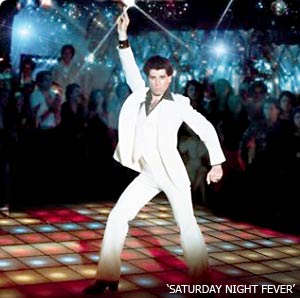
Sometimes I was pretty sure that the invader was me. There were so few foreigners in China at the time, and so few of them were Americans. American pop culture had barely begun to penetrate, and it was mostly bootlegged tapes of “Sound of Music” and a weird fondness for “Home on the Range” (a popular choice for the 6 AM morning wakeup medley on Chinese trains, right after “The East Is Red”). All of sudden, there I was, the first American most of the Chinese people I encountered had ever met. The person my students asked about the American Constitution and Bill of Rights; also, “the Disco Dance.” I worried about saying the right thing, about setting a good example.


And I wondered, was the inevitable invasion of American pop culture a good thing? It was like I’d beamed down from the Starship Enterprise (I was a huge Trekkie), and I was violating the Non-Interference Directive just by being there.

Not that I was any kind of Communist. No pictures of Chairman Mao on this kid’s dorm wall. And after spending six months in a place that had been devastated by the Cultural Revolution, I didn’t have a lot of sympathy for utopian movements, or the manipulation of such sentiments by a fratricidal leadership at war with itself.
                  (by photojournalist Li Zhensheng - check out his story!)

I remember leaving China, crossing into the New Territories, on my way to Hong Kong. I remember that the officials at the border, Customs or whatever they were, demanded that we pay some additional exit fee. I can’t remember how much, but it seemed like a lot of money at the time to a student who had only been a “Junior Foreign Expert” and was paid about a third of what the real “Foreign Experts” made, who still needed to buy a plane ticket home.

I was so ticked off. One last bit of b.s. I hadn’t expected, from a system that seemed designed to screw with people, because it could. “I am so glad to be leaving this place!” I told my friend. “I can’t wait to get across that border.”

I remember, when I did, I turned around and looked back at the country I’d just left. We were surrounded by green, out in a No Man’s land of countryside between the People’s Republic and the British crown colony.

You’ll be back.

I swear it was a voice in my head, clear as anything.

No way, I thought. No way.

Score one for the voices in my head.

Lisa—Sunday

Thursday, April 26, 2012

Author/Friend Bryn Greenwood!

I met Bryn Greenwood thanks to a Yahoo Group advertising itself as a writing workshop. It turned out to be massive and for me, not terribly useful—as far as I could tell the guy who’d started it did so to create a supply of “students” for his series of online classes. So I started my own little group.

Not long after, I received an email from one Bryn Greenwood, asking if we were looking for new members. I said that we were and asked for a writing sample.

What she sent blew me away. Reading her work, it was clear to me that her narrative sophistication, prose-craft and overall maturity as a writer outstripped mine. Which is a little sad, because I’m older than she is. But then I’ve never been known for my maturity.

That was six, six and a half years ago. Since then we’ve gotten to meet in real life, take a road trip from my place in Venice up the coast to my sister’s in San Francisco, chat frequently about our lives, traumas and pets. More to the point, I’ve gotten to read just about everything that Bryn has written. Well, most of it, at least. Understand that Bryn is also one of the most prolific writers I know, so that’s a lot of writing.

Given Bryn’s outsized talents and crazy productivity, I always figured she’d beat me in the race to publication. I’m still a little surprised that I got there first. The ways of publishing are mysterious and at times capricious. But I knew it was just a matter of time before some smart publisher realized what those of us who’ve read Bryn’s work already knew.

And now, here it is, Bryn Greenwood’s debut novel, “Last Will,” a book about “learning to live with the things you inherit from your family.” I’d add a line from “Last Will” that for me sums it up better than anything I could say myself: “When you get to the point where you know the worst thing about someone you love, you know the truth about yourself.”

If you like stories about survival and healing, if you like clear, precise prose, if you like reading about characters who are flawed, sympathetic but most of all, who feel real—read this book.

YEAR OF THE TIGER Launch Day!

It's 1:00 AM here in Venice, California, meaning that it's the official launch day of "Year of the Tiger"—that's "Rock Paper Tiger" in British! I've had such a great time working with editor Jane Johnson, editor Emad Akhtar and the entire Harper Fiction team. BTW, you can see videos of me discussing the book at the HarperCollins crime fiction blog, Killer Reads -- here, and here. I talk about China then and now, the heroine of the book, Ellie McEnroe Cooper, my checkered past, and a little about the business of writing. As a special bonus, you get to meet my cat, Ghost. She was born for the camera...

Tuesday, April 17, 2012

Jacob Wonderbar...now with Space Monkeys!!

[/caption]

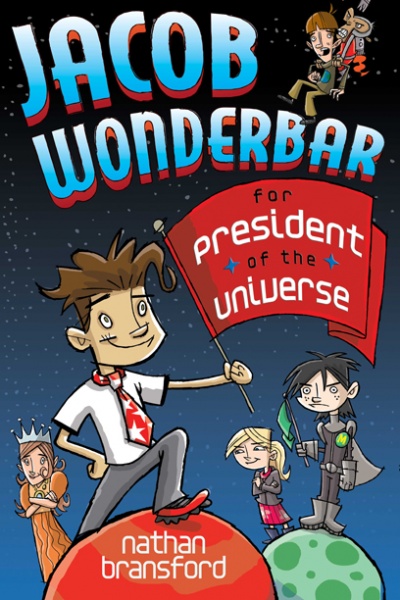
Now that my taxes are filed and I have a few days at home, time to catch up on a few things. First off, my pal Nathan Bransford's second book, JACOB WONDERBAR FOR PRESIDENT OF THE UNIVERSE, is out! This is a fabulous middle grade series, reminding me a bit of Douglas Adams and Roald Dahl. Don't take my word for it--check out the trailer! And watch out for rogue space monkeys...

Tomorrow I will attempt an actual blog post on my recent adventures...

Tuesday, January 24, 2012

Monday, November 28, 2011

Cyber Monday Website Extravaganza!!!


New pages! New covers! Music! Prizes!

Er, actually, I don't know about the prizes. I guess I would have to have a contest of some sort for that. Any suggestions? I have an autographed copy of ROCK PAPER TIGER I could kick in.

What I definitely do have is a lovely revamped website to reveal! Check it out! lisabrackmann.com! Yes, you may have been there before, but it's newer! Shinier! And multi-media-rrific!

From the books page you can navigate to the page that's all about my upcoming novel, GETAWAY (hmmm, maybe an ARC of that. What do you think, Soho Press?). You can also check out the grand reveal of YEAR OF THE TIGER, which is ROCK PAPER TIGER in British! (my UK editor hastens to add that the actual cover will have "blingin' gold foil" on it—I can't wait!...hmmm, maybe a copy of YEAR OF THE TIGER would make a nice prize...I don't have one yet, but I will...)

Finally, something completely different...music! Yes, actual MP3-quality music! Written and sung by me! (and played by some truly talented musicians)

Many thanks to my wonderful web designer, Ryan McLaughlin of Dao by Design for his typically fantastic job!